Shipyard Capability Guide
Capability in a yard is five things: what it can lift, what it can support, what it can weld or laminate, what it can coat, and how fast it can get parts. Everything else is negotiable. This guide sets out how each constraint shapes a scope in Bali so you can judge a plan before committing a boat to it.
1. Lift capability
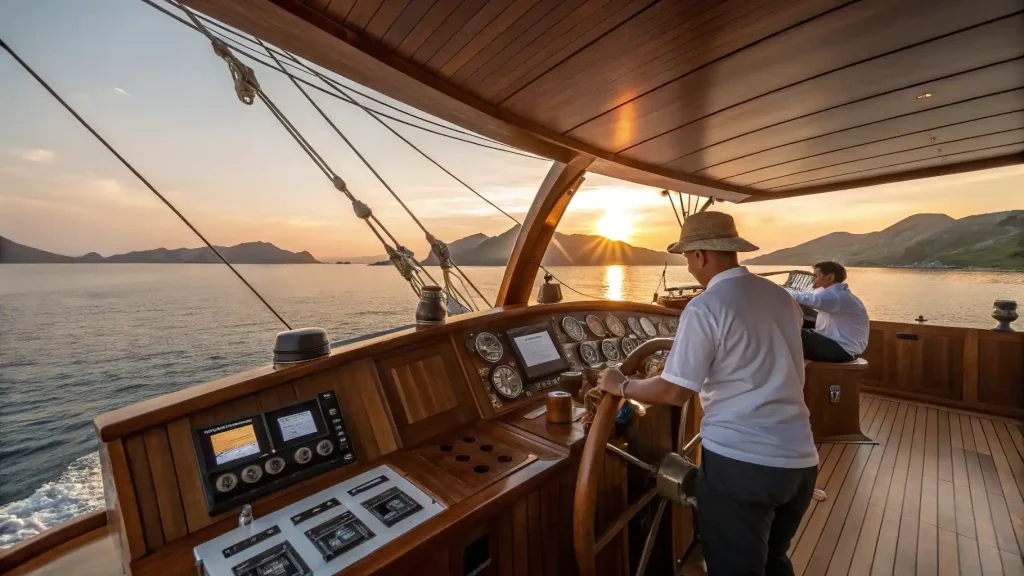
Lift is the first filter and the one that most often removes a facility from consideration. Three numbers matter: maximum weight, maximum beam through the gantry, and the depth of water at the lift approach at the tide state when you intend to arrive. A yard that can lift the tonnage but cannot take the beam is not an option, and neither is one where the approach carries less water than the boat draws.
Sling positions matter as much as capacity. Slings that land on a stabiliser fin, a transducer or a shaft strut cause damage during what should be a routine lift. Where the builder documented lifting points, we use them; where they did not, a blocking and sling plan is built from the general arrangement before the boat arrives.
2. Hull support
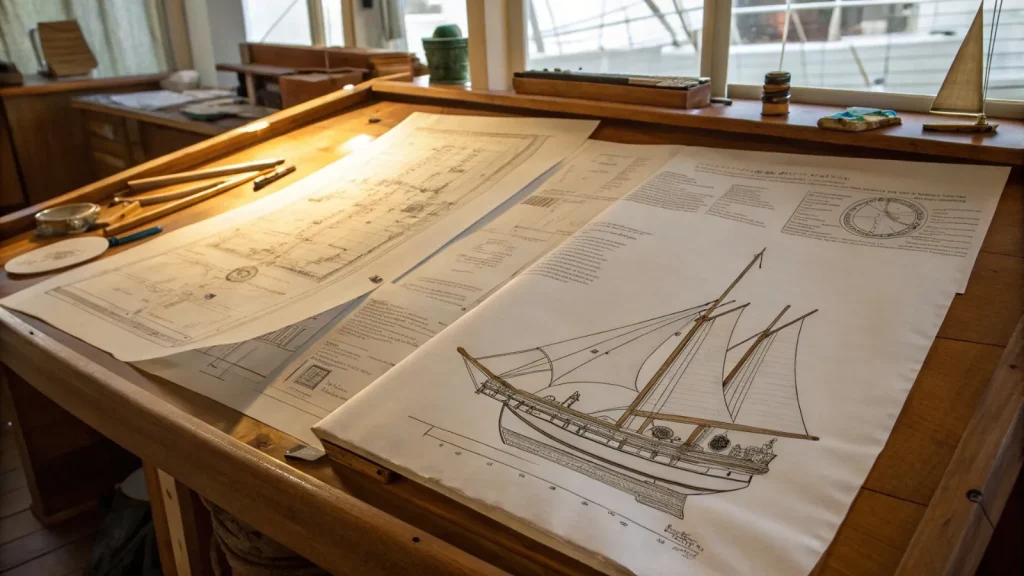
Being lifted is not the same as being supported. A hull carried on badly placed blocks develops hard spots and, on long stays in tropical heat, can take a permanent set. Blocks belong under bulkheads, floors and structural members. Side stands are there to stop the boat falling over, not to carry weight, and they need re-checking after the hull settles.
| Hull material | Support sensitivity | Watch for |
|---|---|---|
| GRP | High on long stays | Print-through and hard spots over unsupported panel. |
| Steel | Moderate | Point loading on plating between frames; corrosion under blocks. |
| Aluminium | Moderate to high | Galvanic contact with blocking materials and yard steel. |
| Timber | High | Drying and seam opening; cradle fit along the full length. |
| Ferrocement | High | Concentrated loads; limited repair trade availability. |
3. Fabrication and laminating trade
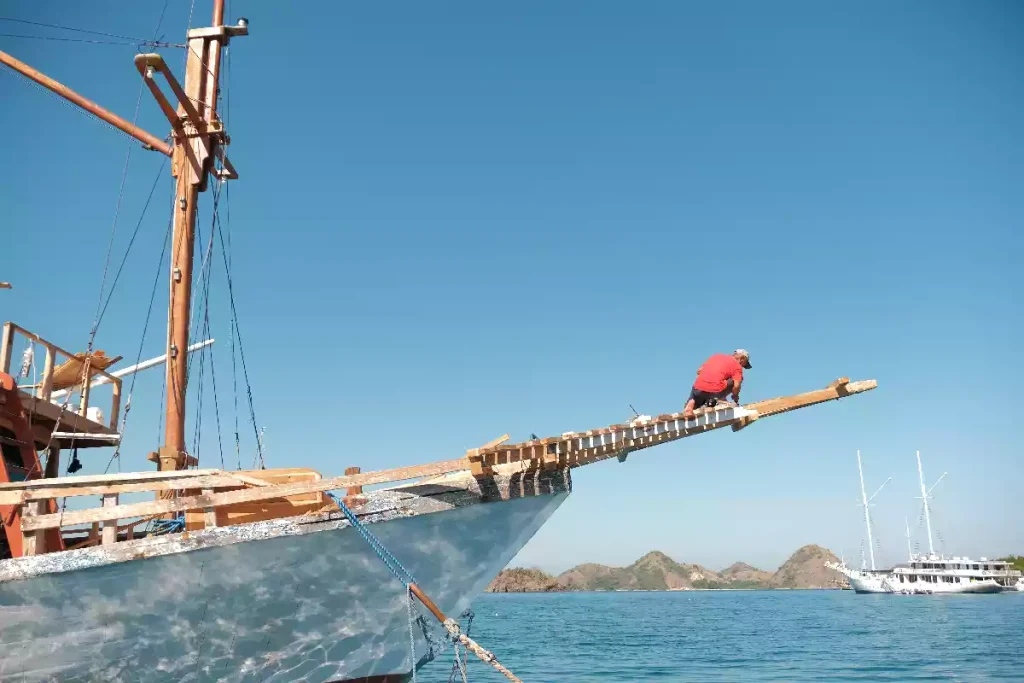
Bali's practical strengths are GRP laminating, timber work, general steel fabrication, marine electrical and joinery. Aluminium welding to a marine standard is available but thinner on the ground, and it is worth confirming the specific welder rather than assuming the yard covers it. Specialist disciplines — hydraulics, stabiliser service, advanced composite repair, some engine marques — usually mean either bringing a technician in or shipping a component out, and that lead time belongs in the programme rather than in a footnote.

4. Coating conditions
Coating is where tropical yards lose the most time, because the constraints are environmental rather than human. Paint systems have humidity and surface-temperature windows, overcoat windows, and cure schedules that do not compress. Working outdoors on a hardstand during the wet season means either containment or a realistic allowance for weather days.
- Surface temperature in the tropics can exceed the coating's specified maximum by mid-morning, which shortens the usable working day to early hours.
- Dew point margin matters more than nominal humidity, and it is the reason evening application often fails.
- Overcoat windows for two-pack systems are unforgiving; a missed window can mean abrading a whole surface back.
- Containment — sheeting and staging — is a real line item, not an optional extra, if a quality topside finish is expected.
On most refits it is not the structural work that sets the finish date. It is the paint schedule. Build the programme around the coating windows and everything else fits; build it around the joinery and the paint will be rushed.
5. Parts and lead time
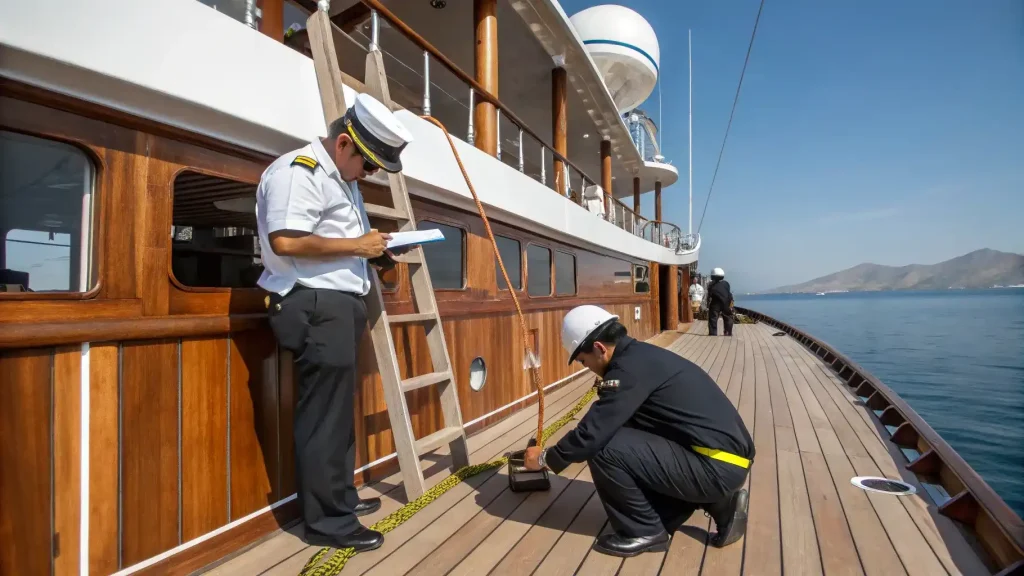
Almost every proprietary marine component in Indonesia is imported. That means freight time plus customs clearance plus the risk of a wrong part arriving. Three practices remove most of the pain: order long-lead items at scope stage rather than at lift; specify part numbers rather than descriptions; and where an item is critical to re-launch, hold a contingency rather than a hope.
6. Documentation and standards
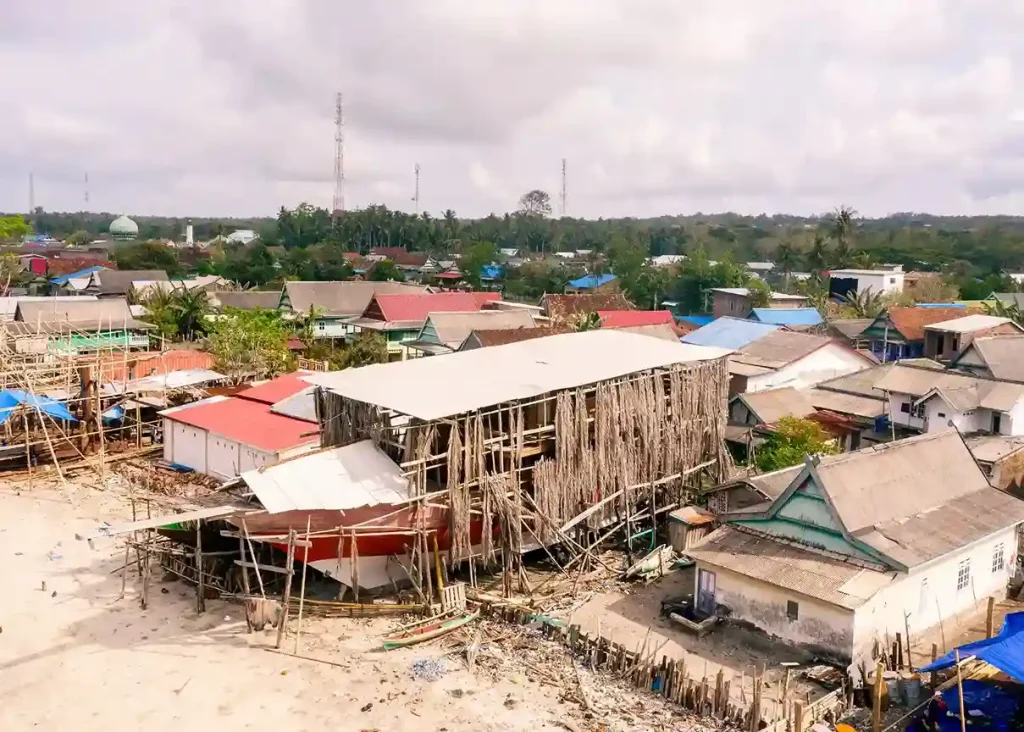
Ask what a yard will give you at the end, before you start. A photographic record per stage, a variation log with written approvals, coating batch and thickness records, and torque or alignment figures where relevant are all reasonable to expect and are what make a job defensible later. The desk holds this record independently of the yard so that it survives even if the yard's own paperwork does not. How to keep it in a form insurers and surveyors accept is covered in documenting repairs for insurance and survey.
Bali Shipyard is a coordination desk, not a yard owner. We survey the vessel, write the scope, place the work with an independent yard or contractor that suits the job, and supervise it to handover. Quotations are issued in USD. Contracts for construction, repair, refit and vessel sale are issued by PT Komodo Galangan Nusantara.
Using this guide
Read it against your own work list. If your scope needs a lift your boat cannot get, a coating window the season will not give, or a specialist the island does not hold, it is better to know before the boat is committed. Where the answer is that Bali is not the right place, we say so — and the wider picture of yard capability across the country is on the Indonesian yard capability map. For the practical geography, see Bali boat yard locations; for how a lift is planned, Bali haul out and dry dock.