Bali Haul Out & Dry Dock
A haul-out in Bali is won or lost at the planning stage. Lift method, draft on approach, blocking plan and slot timing decide whether the boat spends three days out of the water or three weeks. This desk plans the lift, books the slot, supervises the underwater work and manages the re-launch.
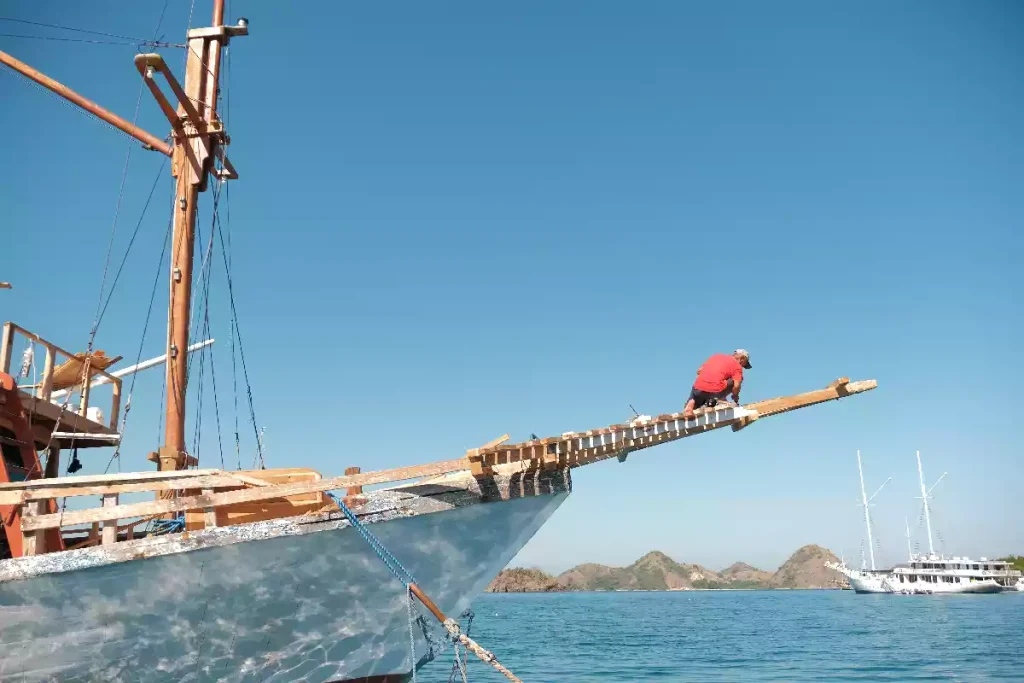
"Bali dry dock" is used loosely by operators to mean anything from a genuine dock to a travel-lift hardstand to a beach slipway. They are different pieces of equipment with different limits, and picking the wrong one is the most common way to waste a yard window.
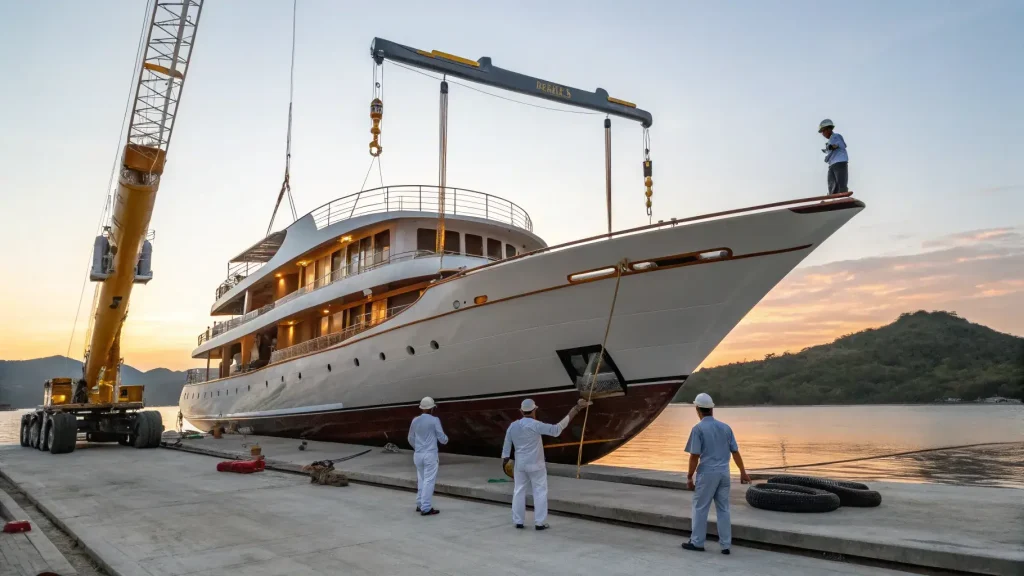
Lift methods and what constrains each
| Method | Suits | Main constraint |
|---|---|---|
| Travel lift (slings) | Most GRP and light-displacement hulls up to yard capacity. | Sling positions must clear running gear; beam must fit the gantry. |
| Slipway / marine railway | Heavier displacement hulls, timber hulls, long keels. | Cradle fit and rail draft; approach depth at the cradle. |
| Mobile crane | Small craft, tenders, dive boats, emergency lifts. | Lifting points and crane reach over the quay edge. |
| Careening / tidal grid | Short underwater inspection and quick antifoul touch-up. | Tide window; limited working time between waters. |
| Afloat (divers) | Prop cleaning, anode change, hull scrub, inspection. | Visibility and current; no coating work possible. |
The full comparison, including how each method loads the hull and what it means for blocking, is set out in Bali haul out methods explained.
What we need before booking a lift
- Draft and displacement. Loaded draft, not brochure draft. The approach to several Bali facilities is shallower than operators expect.
- Beam and air draft. Beam decides whether a travel lift gantry can take the boat; air draft decides whether it can move under anything on the way in.
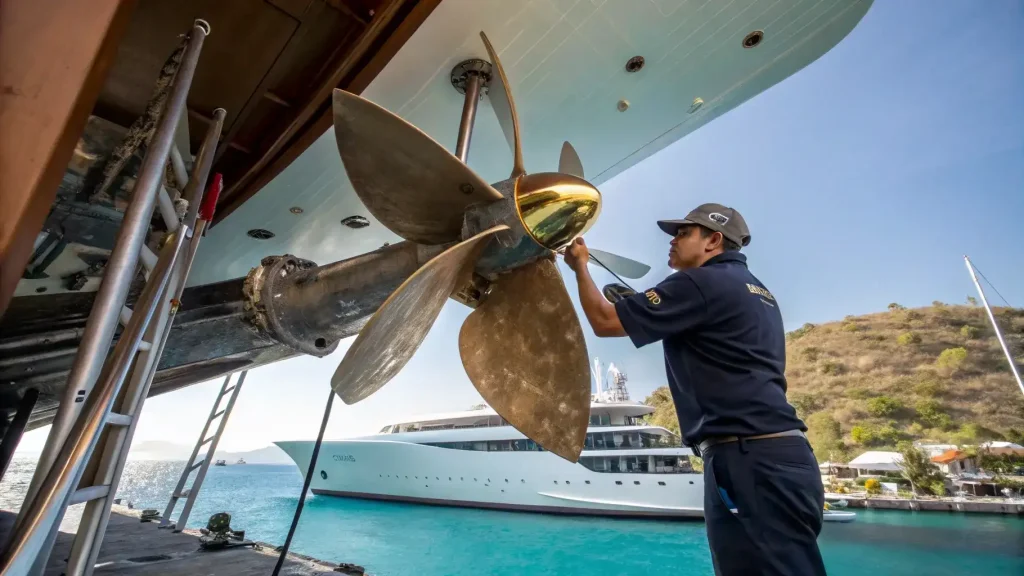
- Hull form and appendages. Sling positions, keel shape, shaft and rudder locations, stabiliser fins, transducers and speed logs.
- Lifting points. Documented sling positions where the builder specified them, or a blocking plan built from the general arrangement where they were not.
- Tank state. Fuel and water levels change lift weight materially on a mid-size boat; we ask for the intended state at lift.
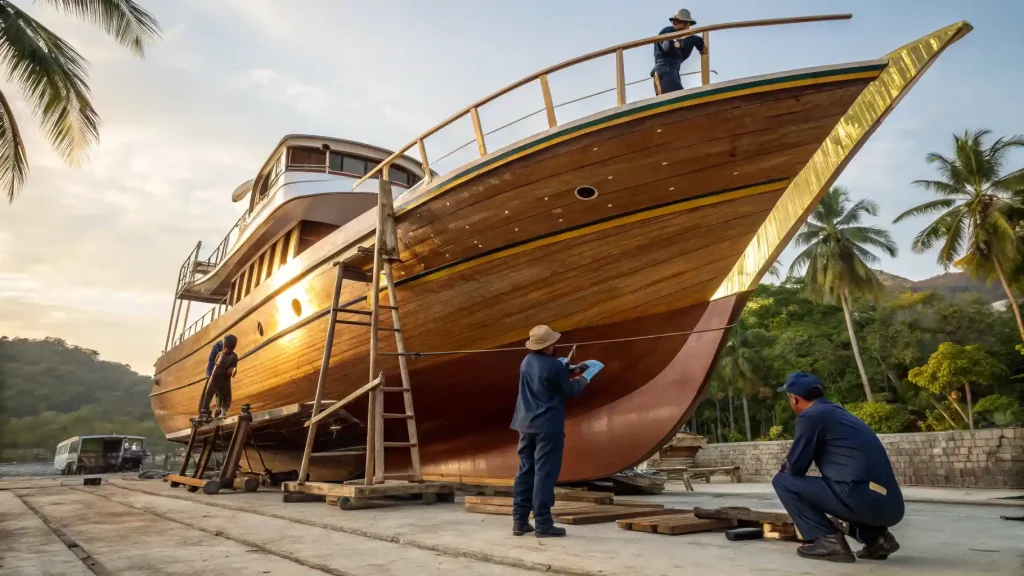
A hull sitting on badly placed blocks for six weeks in tropical heat can take a set. Blocks belong under bulkheads and structural floors, not under unsupported panel. On long stays we ask for the blocking plan in writing and check it before the slings come off.
Standard underwater work scope
Once the boat is out and pressure washed, the underwater body is inspected while it is still wet — that is when moisture patterns, blistering and coating failures are most visible. Typical scope from there:
- Coating assessment, spot repair or full strip; see antifouling and coating systems.
- Anode survey and renewal, bonding continuity checks; see corrosion control.
- Running gear: shaft, cutless bearing, seal, propeller condition and pitch; see running gear work.
- Rudder bearing clearance and stock inspection.
- Through-hulls, seacocks and skin fittings — the single most under-inspected item on a charter boat.
- Osmosis and moisture mapping on GRP hulls; see blister repair.
Tides, weather and the booking window
Facilities on the south Bali coast are tide-sensitive on approach, and the swell that runs in the wet season can close a lift for the day regardless of what the slot book says. Booking therefore needs two things: a target date and a tolerance. We plan lifts with a stated tolerance so that a weather day does not cascade into a lost slot. The mechanics are covered in dry dock planning: tides, draft and booking windows.
Bali Shipyard is a coordination desk, not a yard owner. We survey the vessel, write the scope, place the work with an independent yard or contractor that suits the job, and supervise it to handover. Quotations are issued in USD. Contracts for construction, repair, refit and vessel sale are issued by PT Komodo Galangan Nusantara.
Re-launch and the first 24 hours
Re-launch is a hold point, not a formality. Before the slings come off in the water we want seacocks checked, stern gland set, shaft alignment confirmed after any blocking movement, and bilges dry and observed. The boat then stays alongside for a period with someone aboard before it goes anywhere. More boats are lost in the hours after a launch than during the lift itself.
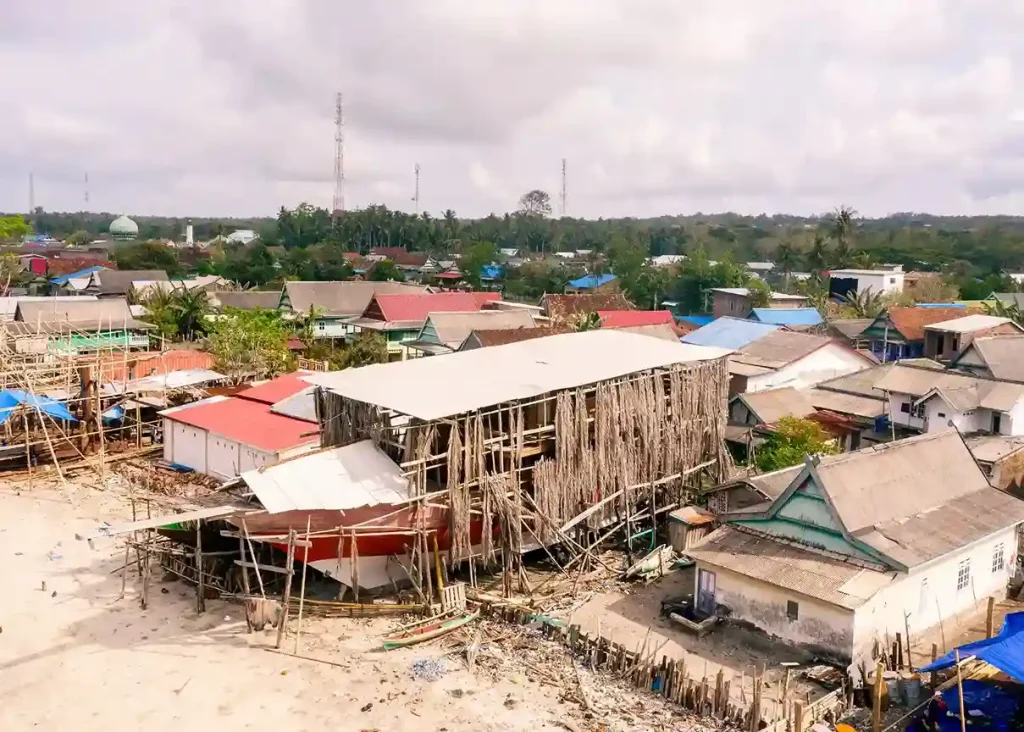
If the vessel is coming out for the off-season rather than for a specific job, the lay-up options and their trade-offs are on Bali slipway and hardstand.
Costs you should expect to see itemised
We do not publish rates, but you are entitled to see a quotation broken into the items below rather than a single figure. If a yard quotation arrives as one line, ask for it split — the split is where the questions live.
- Lift out and lift in, usually charged as two separate movements.
- Pressure wash immediately on lift, which is a technical step and not a courtesy.
- Hardstand or cradle occupancy, charged by day or week, with the duration you stated.
- Blocking and stands, including any block move needed to coat the areas beneath them.
- Power, water and compressed air at the boat.
- Waste handling for coating residue, grit and oil, which is a regulated obligation rather than an optional extra.
- Labour and materials per scope item, with the discovery allowance shown separately.
Hardstand positions are planned around stated duration. Knowing the overstay basis before the lift, rather than discovering it in the final account, is part of a properly scoped job.