
Yacht Refit Bali
A refit is a planned programme, not a long repair. Yacht refit in Bali works when the condition survey comes first, the scope is phased around lift availability and cure times, and someone independent of the yard holds the variation log. This desk runs that structure and issues the estimate in USD.
The difference between a refit that lands on time and one that drifts for months is almost never the skill of the trades. Bali has capable fabricators, painters, electricians and joiners. What refits lack is sequencing discipline: paint booked before tankage is finished, joinery fitted before the wiring is proven, a boat sitting on blocks waiting for a part that was never ordered because it was not in anyone's scope.
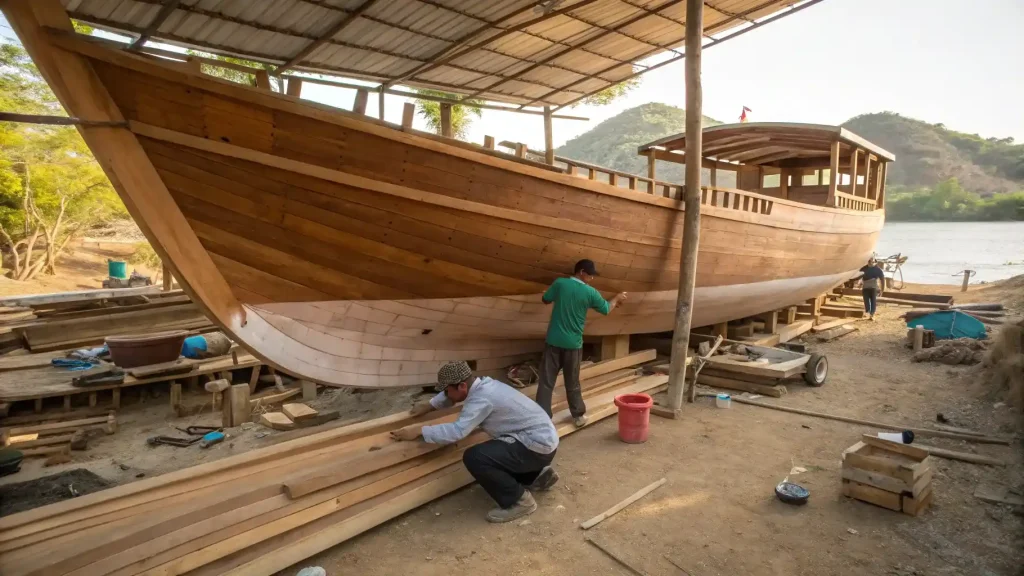
Refit scope categories
Structural & hull
Laminate reinforcement, plate renewal, bulkhead and stringer work, through-hull renewal, fairing and coating.
Propulsion
Engine overhaul or replacement, gearbox, shaft line, propellers, controls and instrumentation.
Electrical
Distribution rebuild, DC and AC separation, battery bank replacement, charging and shore power, alarms.
Tankage & plumbing
Fuel, water and black-water tanks, transfer and filtration, sanitation, watermaker integration.
Deck & superstructure
Teak renewal, hardware re-bedding, hatch and window reseal, davits, bimini and rail work.
Interior
Joinery, upholstery, headlining, galley and heads refit, air conditioning and insulation.
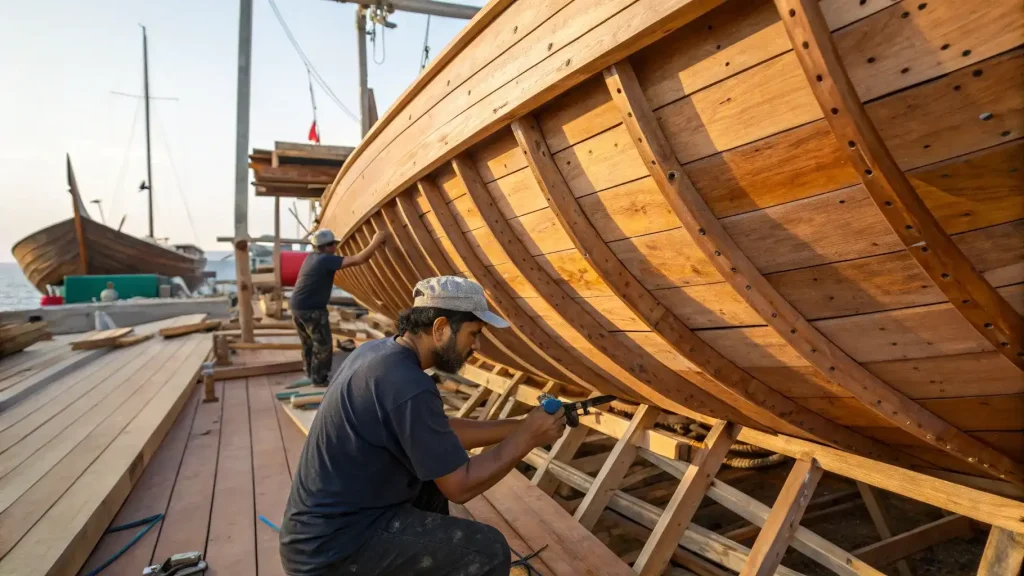
How a refit is planned
1. Condition survey. Before any wish list is priced, the boat is surveyed: moisture readings on a GRP hull, thickness readings on steel or aluminium, tank inspection, electrical audit, and a run of every system that is supposed to work. A refit built on a wish list without a survey ends with the owner paying twice — once for the upgrade and once for the defect the upgrade sat on top of.
2. Split must-do from want-to-do. The survey findings become the mandatory list. The owner's ambitions become the discretionary list. They are priced separately so that when the budget tightens, the right things get cut.
3. Sequence against physical constraints. The programme is built backwards from the constraints that cannot be negotiated: lift slot availability, coating cure time, and lead time on imported parts. Everything else moves around those three.
4. Set hold points. Inspection gates after strip-out, after structural work, after fairing, before primer, before topcoat, before re-launch, and before sea trial. Each one is a moment where the owner can see the boat honestly.
5. Lock the variation process. No verbal variations. A discovered item is photographed, priced in USD, and approved in writing before it proceeds. This single rule is the difference between a refit account you recognise and one you argue about.
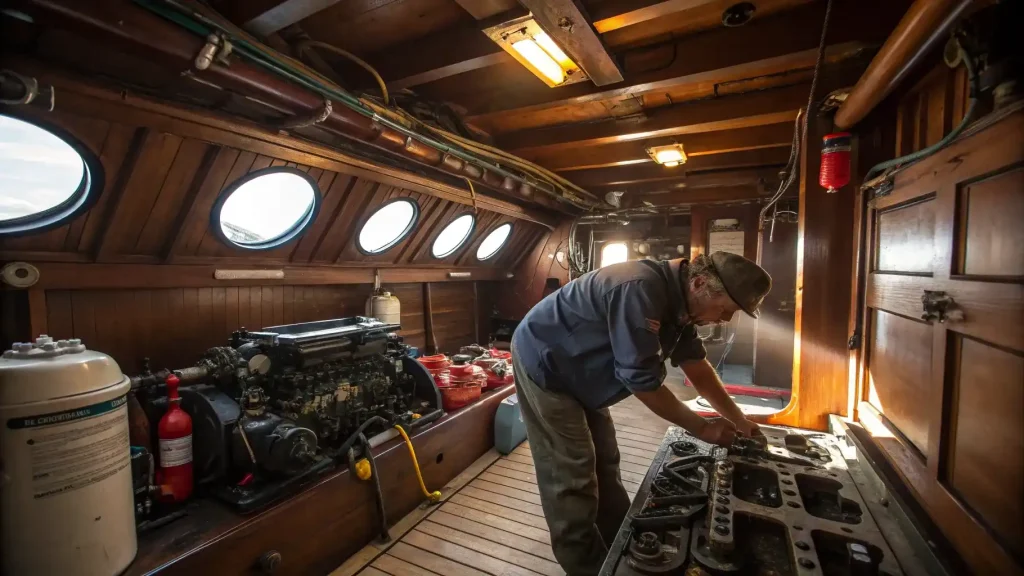
A realistic programme shape
| Phase | Work | Constraint that drives it |
|---|---|---|
| Pre-lift | Survey, scope, parts ordering, slot booking. | Import lead times start now, not at lift. |
| Lift & strip | Haul-out, pressure wash, coating strip, hardware removal. | Lift slot; see haul-out and dry dock. |
| Discovery | Inspection of exposed structure, moisture mapping, revised scope. | The largest source of variations. |
| Structural | Laminate, plate, frame, tank and through-hull work. | Must finish before fairing starts. |
| Systems | Electrical, plumbing, propulsion, machinery. | Must be proven before joinery closes access. |
| Fair & coat | Fairing, primer, topcoat, antifouling. | Weather and cure time; see antifouling in Bali. |
| Fit-out | Joinery, upholstery, headlining, hardware refit. | Only after systems sign-off. |
| Trial | Re-launch, commissioning, sea trial, snag list, handover. | Snags are closed before the boat leaves. |
Closing joinery over untested wiring. Access is the most expensive commodity on a refit; once a bulkhead is faced and a headlining is fitted, a fault behind it costs several times what it would have cost to fix while the space was open. Systems get proven first, always.

Working seasons and refit windows
Bali's practical refit calendar is shaped by two things: the charter season and the rain. Coating work in particular is sensitive to humidity and surface temperature, and a wet-season programme needs either containment or a longer allowance for weather days. Boats that intend to trade the Komodo season generally aim to come out early, so the yards fill from that direction. The trade-offs are set out in wet season versus dry season.
Detailed scope sequencing, including how long each phase realistically holds a hardstand, is covered in yacht refit scope and sequencing.
Bali Shipyard is a coordination desk, not a yard owner. We survey the vessel, write the scope, place the work with an independent yard or contractor that suits the job, and supervise it to handover. Quotations are issued in USD. Contracts for construction, repair, refit and vessel sale are issued by PT Komodo Galangan Nusantara.

After the refit
A refit resets a vessel's condition; it does not maintain it. Boats that hold their value after a programme are the ones that move straight onto a planned maintenance calendar instead of waiting for the next survey to find something. That structure is described on yacht maintenance Bali, and the shape of past programmes is shown in the project portfolio.