Refit Project Portfolio
These are representative programme profiles, not named client disclosures. They show the shape of work this desk coordinates in Bali — what the scope was, what constrained it, and how the sequence was built. Vessel identities and commercial terms are confidential and are not published.
Owners do not generally want their vessel's defect history in public, and a portfolio that names boats and quotes figures usually means somebody's confidentiality was traded for marketing. The profiles below are written so the engineering is useful and the client is not identifiable.
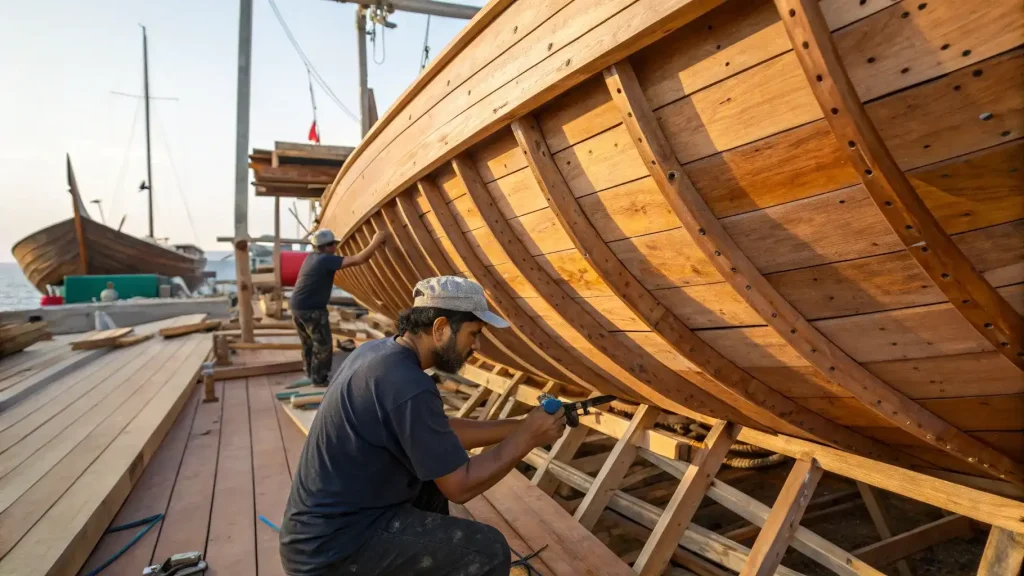
Profile A — charter motor yacht, annual haul-out with discovery
Presenting scope: routine annual lift, antifoul, anode renewal, propeller clean before the dry-season charter run.
What appeared after pressure wash: localised coating breakdown around the running gear and two soft areas near a through-hull, plus anode consumption well above expected rate.
How it was handled: work stopped at the post-wash hold point. Moisture readings were taken and mapped, the affected areas were opened rather than coated over, and a bonding continuity test was run to explain the anode consumption — which traced to a broken bonding connection rather than a stray-current problem. Revised scope and revised USD figure were approved in writing before laminating started.
Lesson: the hold point after pressure washing is the most valuable inspection gate in the whole calendar. Painting over a soft area buys one season and costs three. Related reading: tropical corrosion control.
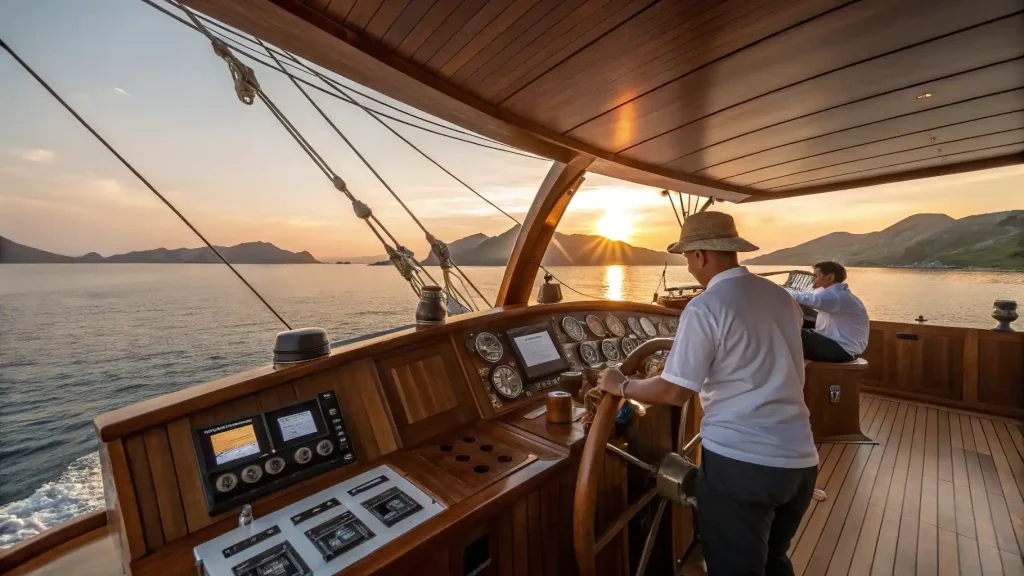
Profile B — sailing yacht, deck leak chain
Presenting scope: interior water staining in two cabins, owner assumed hatch seals.
What it actually was: hatch seals were part of it; the larger source was deck hardware bedded on a compound long past its life, with water tracking along a core void to a point several metres from the entry.
How it was handled: the interior repair was deliberately deferred. Hardware was removed and re-bedded, the wet core was opened, dried and rebuilt, and the deck was then flooded and observed before any joinery or headlining went back. Interior finishing followed only after two rain events with no ingress.
Lesson: repairing the visible damage before proving the source dry is the most common way to pay for the same job twice. Related reading: teak deck repair and recaulking.
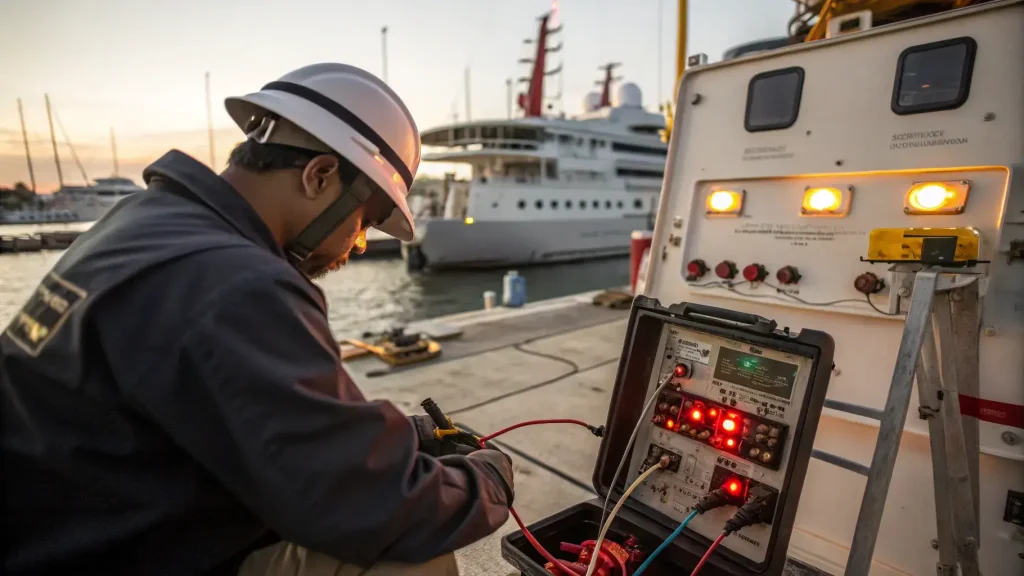
Profile C — dive boat, repower
Presenting scope: replace tired engines before the season.
Constraints: imported engines with a long lead time; limited hardstand availability in the weeks before the season; shaft line and beds sized for the outgoing units.
How it was sequenced: engines and controls were ordered at scope stage, months before the lift. Bed modification and shaft-line work were surveyed and drawn while the boat was still trading, so that when the lift slot opened the yard was executing a known plan rather than measuring. Alignment was set after the boat was back in the water and had settled, not on the blocks.
Lesson: on a repower the yard time is short and the procurement time is long. Booking the yard first and ordering later is the standard way to lose a season. Related reading: repowering in Bali.

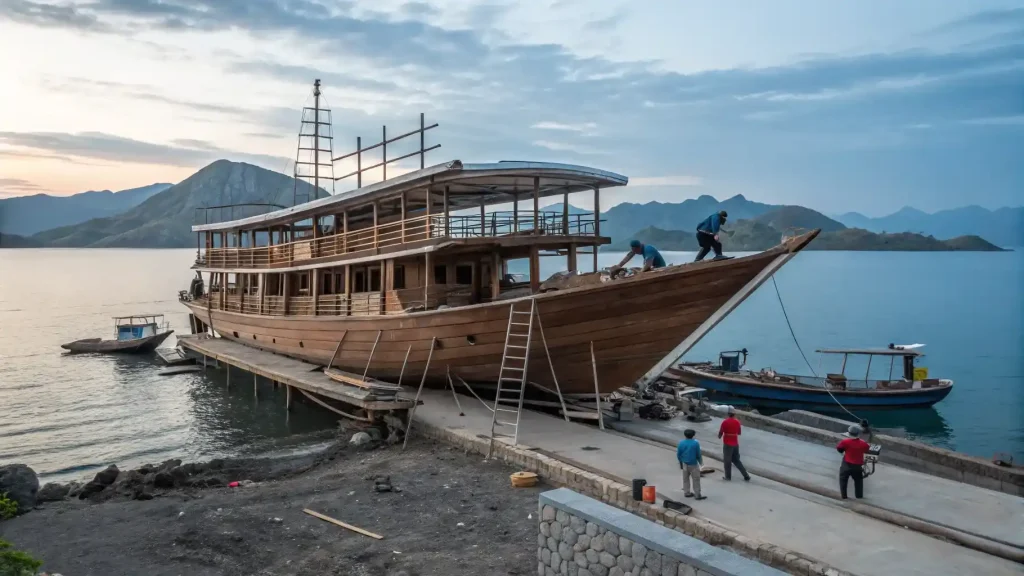
Profile D — traditional timber vessel, structural repair
Presenting scope: weeping seams and a suspected fastening problem in the topsides.
What was found: a run of degraded fastenings and two frames requiring partial replacement, discovered progressively as planking was opened.
How it was handled: scoped deliberately as a staged job with a large discovery allowance and inspection after each opened section, because timber structural work cannot be fully priced from outside. The vessel was slipped rather than lifted, so the cradle carried the hull along its length.
Lesson: timber work should be scoped in stages with an honest allowance, not as a fixed-price fiction. Related reading: slipway versus hardstand.
Profile E — motor yacht, full topside coating programme
Presenting scope: tired topsides, owner wanted a full repaint before a sale season.
Constraints: coating windows in a humid climate, containment requirement for a quality finish, and a hardstand slot long enough to absorb weather days.
How it was sequenced: the programme was built backwards from the coating schedule. Fairing was completed and signed off at a hold point before primer; the paint days were planned against early-morning surface temperature and dew point margin rather than against the calendar; weather-day allowance was written into the programme instead of being absorbed as an overrun.
Lesson: on a paint job, the paint owns the programme. Every other trade schedules around it. Related reading: coating systems in Bali.
What these profiles have in common
- The scope was written before the boat moved, and it named the hold points.
- Discovery was expected and budgeted, not treated as a surprise.
- Variations were priced in USD and approved in writing before work continued.
- Somebody independent of the yard was on the hardstand while the work happened.
- The job closed with a photographic record the owner still holds.
Bali Shipyard is a coordination desk, not a yard owner. We survey the vessel, write the scope, place the work with an independent yard or contractor that suits the job, and supervise it to handover. Quotations are issued in USD. Contracts for construction, repair, refit and vessel sale are issued by PT Komodo Galangan Nusantara.
If your job resembles one of these, the pages that follow it in detail are Bali boat repair, yacht refit Bali and Bali haul out and dry dock.