
Bali Slipway & Hardstand
A slipway suits heavy and long-keeled hulls; a hardstand suits everything that a travel lift can carry and anything staying ashore for weeks. The choice affects cost, how the hull is supported, and how much work can happen around the boat. This desk plans the support and places the vessel accordingly.
Choosing between them is not a preference question. It is decided by hull form, weight, how long the boat is staying, and what work is planned while it is out.
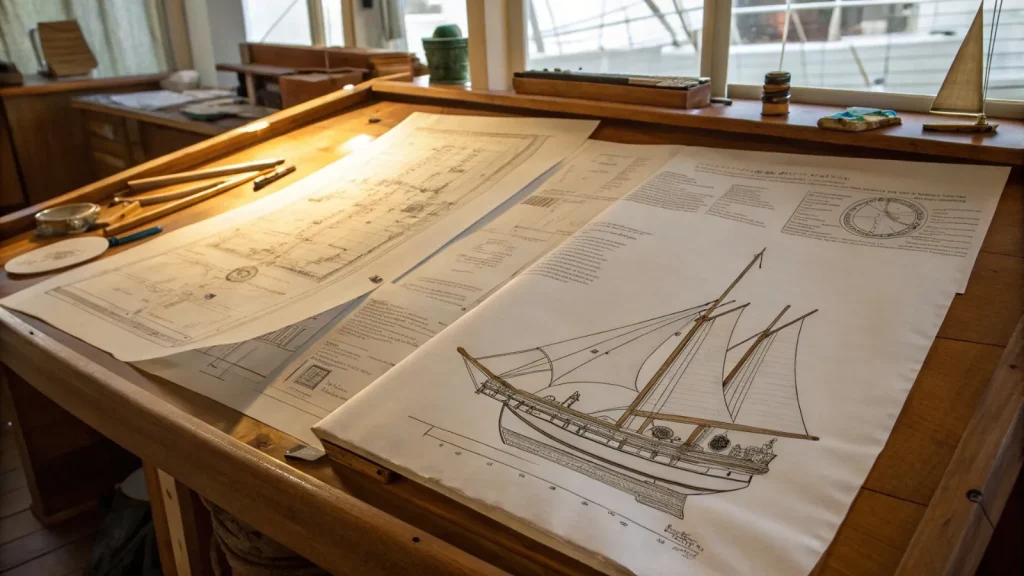
Slipway versus hardstand
| Slipway / marine railway | Hardstand (travel-lift) | |
|---|---|---|
| Best for | Heavy displacement, long keel, timber hulls, traditional craft. | GRP, aluminium, planing hulls, catamarans within gantry beam. |
| Support | Cradle carries the hull along its length. | Keel blocks plus side stands or props. |
| Access around the hull | Restricted by the cradle and rails. | Open on all sides; better for coating and staging. |
| Long stays | Occupies the slipway, so usually short. | Designed for it; the boat can sit for months. |
| Constraint | Cradle fit and approach depth at the rails. | Gantry beam, sling clearance and yard ground bearing. |
The decision logic, including the cases where a boat should be slipped rather than lifted even though the lift is available, is covered in Bali slipway versus hardstand.

Preparing a boat for tropical lay-up
Bali's storage problem is not cold. It is humidity, ultraviolet, biological growth and insects, and a boat left ashore without preparation deteriorates faster than one left afloat and used. A prepared lay-up is a checklist, not a favour:
- Ventilation before sealing. Airflow through the interior beats sealing it up. Closed, humid interiors grow mould in weeks.
- Fuel treated and tanks full or near-full to limit condensation and diesel bug growth in a humid climate.
- Water systems drained or dosed, and the watermaker pickled per its manual rather than by improvisation.
- Batteries maintained on a proper charge regime, not simply disconnected and forgotten.
- Canvas and covers UV-rated. Low-grade sheeting shreds within a season and abrades gelcoat while it does.
- Deck drains and scuppers cleared, and the boat trimmed on the blocks so water actually runs off.
- Soft goods ashore. Cushions, mattresses, charts and books do not survive a wet-season lay-up on board.
- Insect and rodent control at the props and stands, which is where they board.
The single strongest predictor of how a laid-up boat looks after three months is whether somebody agreed to walk it every two weeks and write down what they saw. Unattended storage is where hoses perish, covers tear and small leaks become interior damage.

Blocking for a long stay
Short-stay blocking and long-stay blocking are not the same job. For a stay measured in months, blocks belong under structural members, stands are checked and re-tensioned after the hull settles, and the boat is trimmed with a slight stern-down attitude so rain runs aft rather than pooling. Hulls left on poorly placed blocks develop hard spots, and on GRP that shows up later as a print-through line that has to be faired out at the owner's cost.
Where a boat is on the hard for a coating programme rather than storage, the blocking plan also has to allow the blocks to be moved so the whole underwater body can be coated. That move is a scheduled event with its own hold point, not something to improvise on the last day.

Security and yard rules
Yards in Bali differ in access control, hot-work rules and whether crew may live aboard while ashore. These are settled at booking, because a boat that arrives assuming live-aboard is permitted and finds it is not has an accommodation problem the same evening. Hot-work permissions in particular are strict where boats are stored close together — see yard safety, hot work and fire watch standards.
Bali Shipyard is a coordination desk, not a yard owner. We survey the vessel, write the scope, place the work with an independent yard or contractor that suits the job, and supervise it to handover. Quotations are issued in USD. Contracts for construction, repair, refit and vessel sale are issued by PT Komodo Galangan Nusantara.

Coming out of lay-up
Recommissioning is a scoped job in its own right: seacocks exercised and checked, hoses and clamps inspected, impellers replaced, belts and filters renewed, batteries load-tested, systems run under load, and a sea trial before the boat carries anyone. Boats that go straight from a long lay-up to a charter without this step are where the season's first breakdown comes from. The maintenance rhythm that avoids it is on yacht maintenance Bali, and the yards that suit different hull types are mapped on Bali boat yard locations.

Ground conditions matter more than people expect
A hardstand is only as good as what is under it. In Bali, seasonal rain softens ground that was firm in the dry months, and stands that were correctly set in August can be carrying differently in January. Three practical consequences:
- Load spreading. Stands and blocks on soft ground need pads that spread the load, not bare feet sitting on gravel.
- Post-rain checks. After heavy rain, stands are re-checked and re-tensioned. This is the single most common omission on long stays.
- Drainage around the boat. A vessel sitting in a puddle for months corrodes at every point where metal meets standing water, and the underside of the keel is the last place anyone looks.
Where the ground is genuinely marginal, the honest answer is a different position on the hardstand or a different facility, not more stands.