
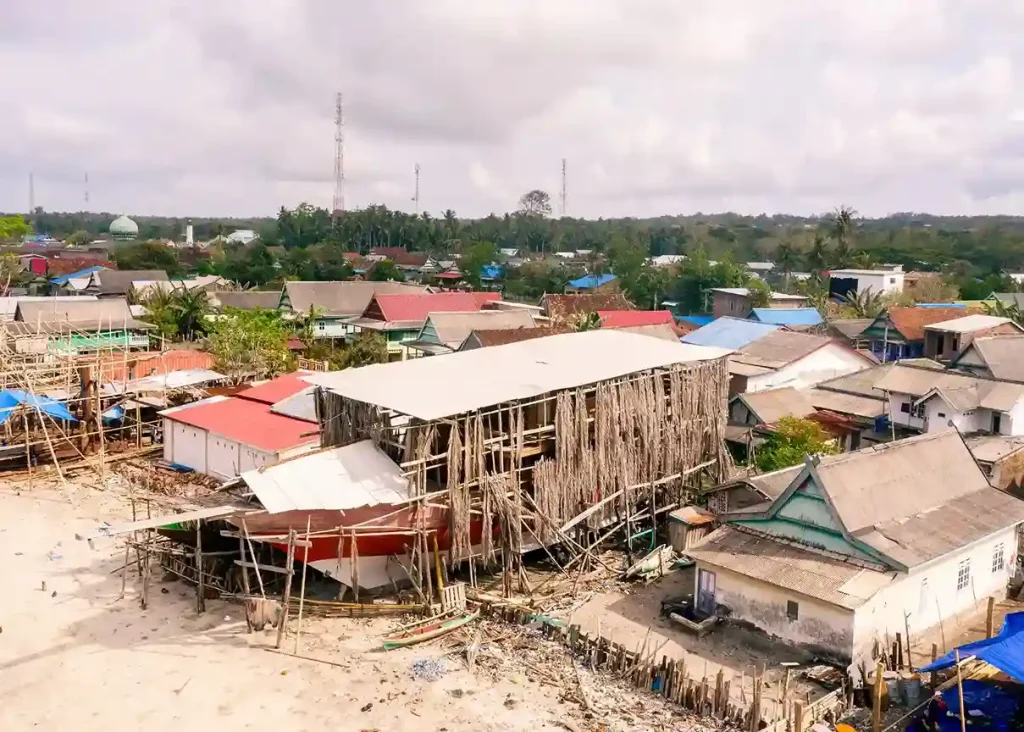
Benoa is Bali’s principal harbour and the densest concentration of marine trades on the island, which is its main advantage: fabrication, electrical, engine service, refrigeration and freight clearance sit within a short radius. Its main constraints are approach depth at the working tide state, berth availability during busy commercial periods, and congestion in the run-up to the charter season.
This is a practical orientation, not an endorsement of any facility. Bali Shipyard is independent of the operators in the precinct and places work where the job fits.
Why trade density is the point
The hidden cost in most yard jobs is not labour rates — it is waiting. Waiting for a welder who is at another yard, waiting for a part that has to come from the other side of the island, waiting for a specialist who visits once a week. A precinct where most trades are within a short drive collapses that dead time, and on a multi-trade job that is worth more than any difference in hourly rate.
Practically, the disciplines that matter for a mixed scope are:
- Steel and general fabrication.
- GRP laminating and fairing.
- Marine electrical and electronics.
- Diesel engine and generator service.
- Refrigeration and air conditioning.
- Hydraulics and steering systems.
- Upholstery, canvas and joinery.
- Freight forwarding and customs clearance for imported parts.
A yard with the lift but without the trades around it turns a three-week job into a six-week job without anybody doing anything wrong.
What to verify before committing
| Item | Why it matters |
|---|---|
| Channel and berth depth at your tide state | Loaded draft, not brochure draft. This eliminates options fastest. |
| Which specific facility holds the lift | The precinct is not one operator; the lift you need may be a run away from the workshop you need. |
| Available slot and its tolerance | A slot dependent on another vessel launching on time is not a firm slot. |
| Hardstand duration allowed | Positions are planned around duration; overstaying creates friction that lands on your job. |
| Hot-work permissions | Affects placement and whether crew can remain aboard. |
| Live-aboard policy | Changes accommodation and security arrangements for a long stay. |
| Access hours and security | Determines whether contractors you bring in can work when they need to. |
A working harbour prioritises commercial movements. Yacht and small-craft operations fit around them, which is why a berth or a lift confirmed weeks ago can still shift by a day. Plan with tolerance rather than treating a date as fixed.
Planning work in a busy precinct
Arrive prepared, not hopeful. Long-lead parts ordered, scope written, lift plan and sling positions agreed, and the duration honestly stated. A boat that arrives with a vague list is a boat that occupies hardstand while a scope is written.
Book the trades, not just the yard. Density means the specialists exist; it does not mean they are free on your dates. On a multi-trade job the sequencing is what needs coordinating, and that is a scheduling exercise done in advance — see refit scope and sequencing.
Respect the seasonal peak. Everyone tries to be ready before the dry-season charter run, which makes those weeks the hardest to book and the most prone to slippage. The alternative windows are discussed in wet season versus dry season.
Logistics that catch people out
- Imported parts. Freight and customs clearance take real time. Ordering by part number at scope stage, not description at lift stage, is the difference between a boat working and a boat waiting.
- Waste and environmental rules. Coating waste, oil and grit disposal are regulated and enforced in a working port. Budget for compliant disposal rather than assuming it is free.
- Contractor access. Bringing your own technician into a precinct usually needs prior arrangement, not a conversation at the gate on the day.
- Crew logistics. Accommodation, transport and provisioning during a long stay ashore are their own planning problem; shoreside support is available through shoreside crew and logistics desk in Bali.
When Benoa is not the right answer
Three cases where another option is better:
- Small craft with simple needs. A dive boat needing an antifoul and an outboard service does not need a commercial precinct; the Serangan cluster is often more practical — see Serangan boat yard access and draft.
- Heavy displacement or timber hulls. A slipway cradle may support the hull better than slings, and slipways are not always where the lift density is — see slipway versus hardstand.
- Long lay-up. Storing a boat in the busiest, most expensive precinct on the island for months is rarely the best use of money.
The comparative view across the island is on Bali boat yard locations, and the underlying limits are set out in the shipyard capability guide.
Sequencing a multi-trade job in a dense precinct
Trade density only pays if the trades are sequenced. In practice that means one person holding the programme and saying no to work that would block a later phase. The pattern that works:
- Structural and anything that penetrates the hull first. Everything downstream depends on it being finished, not nearly finished.
- Machinery and systems next, proven under load, before any joinery closes access to them.
- Coating scheduled against weather and surface temperature, with weather-tolerant indoor work sequenced as filler for lost days.
- Fit-out last, once systems have signed off.
- Launch, commission and trial as a single phase with snags closed before handover.
Four contractors each optimising their own week. Individually every one of them is efficient; collectively the boat loses a fortnight. Somebody has to own the sequence, and it cannot be the contractor whose phase is currently running.
Budgeting the non-obvious items
- Waste disposal for coating residue and grit, which is regulated in a working port.
- Power, water and compressed air at the boat rather than at the shed.
- Customs clearance and freight on imported parts, including the risk of a wrong item restarting the clock.
- Crew accommodation and transport during a long stay ashore.
- Contingency days for slot movement caused by commercial traffic.