After a grounding or impact, the order is: people, then flotation, then position, then lift, then scope. Do not start negotiating repairs while the boat is still making water. And photograph everything before anything is disturbed — that record decides the insurance outcome later.
The first hour
- People. Account for everyone, injuries first. Nothing below matters more than this.
- Is water coming in? Check bilges, engine space, lockers and the areas near the impact. A boat aground may only start flooding once it comes off.
- Do not immediately try to come off. A grounded vessel is often being held together by the ground it is sitting on. Coming off a reef under power can convert a repairable hull into a sinking. Assess first.
- Stabilise. Pumps running and monitored, damage control gear deployed, engine and gearbox checked for water ingress before running anything.
- Report the position accurately and say plainly whether the vessel is making water and whether anyone is injured. Detail comes later.
Position · what happened · making water yes or no · injuries yes or no · what the crew has already done. Five lines. Everything else can follow once help is moving.
Photograph before you touch anything
This is the step crews skip and insurers ask about. Before any damage-control measure disturbs the scene, take wide shots showing the vessel and the surroundings, close shots of the damage with something for scale, engine and machinery spaces, and the instrument displays. Note the time. If the vessel is aground, photograph the ground it is on.
These images cost nothing and are frequently the difference between a straightforward claim and a long argument about causation. How that evidence is carried through the repair is covered in documenting repairs for insurance and survey.
Getting the boat somewhere it can be lifted
The choice is between moving under her own power, being towed, or being lifted where she lies. Each has conditions:
| Option | Viable when | Risk |
|---|---|---|
| Own power | Flooding controlled; propulsion and steering intact; hull integrity assessed. | Undetected damage worsening underway. |
| Tow | Vessel floats but cannot proceed safely. | Tow loads on damaged structure; agree terms before accepting a line. |
| Crane lift in situ | Vessel near a suitable quay; lifting points sound. | Crane radius rating; improvised lifting points. |
| Beach and secure | No safe alternative; further sinking imminent. | Additional hull damage; recovery becomes a bigger job. |
Before accepting a tow, agree the basis in writing. A tow offered helpfully in the moment can be presented afterwards as salvage, with a claim attached. Stating clearly that assistance is accepted on a stated commercial basis, before the line goes on, avoids a dispute that outlasts the repair.
The emergency lift
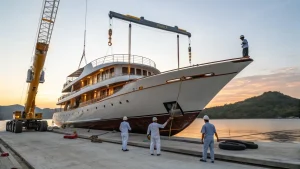
An emergency lift takes whatever slot exists, which usually means the closest facility that can physically take the boat rather than the best-equipped one. That is the correct trade: get the vessel out of the water and stable, then decide where the repair happens. Moving her later, with the damage assessed and controlled, is a planned operation — see moving a vessel between Bali yards.
Points that matter on an unplanned lift:
- Sling positions must avoid the damaged area entirely; lifting through a compromised structure makes it worse.
- Blocking must support sound structure, not the damaged zone.
- Expect water to be trapped inside the hull, in tanks, voids and lockers, changing the weight considerably.
- Have pumps ready at the lift: a boat that has been flooding while afloat may release a great deal of water as it comes up.
First 24 hours ashore
- Drain, ventilate and start drying. Trapped water in a tropical climate causes secondary damage quickly, and mould begins in days.
- Preserve machinery. Engines and gearboxes that have ingested water need immediate attention — flushing and oiling, not a decision made next week.
- Wash salt off electrical components and disconnect batteries where flooding reached them.
- Do not strip damage away yet. Once the vessel is stable and photographed, controlled investigation begins — but wholesale clean-up destroys evidence and hides the extent of the damage.
- Secure the boat: a damaged vessel on a hardstand needs blocking checked and a watch arrangement agreed.
Then, and only then, scope the repair
With the boat stable, the normal process begins: full survey including thickness or moisture readings across a mapped area, written scope with hold points, and a USD estimate. Grounding damage in particular is deceptive — the visible scar is rarely the extent, because impact loads travel into the structure. Expect internal inspection of floors, stringers, bulkheads and tank tops, and expect a discovery allowance.
The sequence from there follows how boat repair in Bali works, and where the damage is extensive it may be more sensible to combine it with deferred items into a single programme rather than repeat the disruption — see yacht refit Bali.
What to do before it ever happens
- Keep an up-to-date insurance contact and policy number somewhere reachable from a phone, not only in a folder on board.
- Know your loaded draft and your lifting points, and have the general arrangement available digitally.
- Carry damage-control materials and know where they are.
- Keep the emergency steering gear tested rather than assumed.
- Agree in advance, with your crew, who calls whom and in what order.
To reach the desk immediately, the contact route is on the contact page.
Machinery that has been submerged or splashed
Time matters more than method with water-affected machinery, and the window is measured in hours rather than days.
- Do not attempt to start an engine suspected of having ingested water. A hydraulic lock turns a flooding incident into a rebuild.
- Drain and refill oil and gear oil to displace water, then repeat after turning by hand where the manufacturer’s guidance allows.
- Flush salt off electrical assemblies with fresh water and dry them thoroughly. Salt left in place keeps corroding long after the surface looks dry.
- Isolate and remove batteries that were submerged; do not attempt to recover them into service.
- Preserve, then decide. The first task is arresting the damage, not judging whether a component is economic to repair.
All of this is recorded, because an insurer will want to know what was done in the first day and whether the damage worsened through action or inaction.