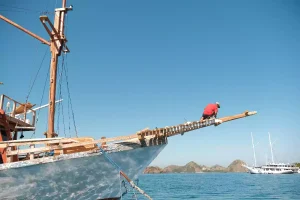

Move a vessel between yards only when the reason is structural — the lift is in one place and the capability is in another, or the current facility genuinely cannot absorb the scope. Every move costs time, adds handling risk, and creates a gap in responsibility. When it is the right call, it needs a condition survey either side, agreed insurance, and a written handover.
Good reasons to move
- Capability mismatch. The lift exists here; the welder, the spray facility or the specialist exists there.
- Scope growth beyond the facility. A yard that can hold a boat for a week cannot always hold it for three months without displacing other work.
- Emergency to planned. An emergency lift takes whatever slot exists. Once the vessel is stable, moving her to the right facility is normal and sensible — see emergency haul-out.
- Long-stay economics. Storing a vessel for months in the busiest precinct on the island is rarely the best use of money.
Bad reasons to move
- A dispute that a conversation would resolve. Moving mid-job leaves work half-finished and responsibility ambiguous.
- A marginally lower rate. The move usually costs more than the difference.
- Impatience during a discovery phase. Discovery happens wherever the boat is.
The most expensive part of a move is not the transport. It is that responsibility for the vessel’s condition changes hands, and without a documented condition survey at both ends, any damage found afterwards becomes an unresolvable argument.
By water or by road
| By water | By road | |
|---|---|---|
| Suits | Vessels seaworthy and able to be launched. | Vessels already ashore, or where the sea route is impractical. |
| Main risks | Weather; condition of a vessel mid-repair; tidal windows at both ends. | Road width, overhead clearance, cradle design, handling at both ends. |
| Extra costs | Two launches and two lifts; crew for the passage. | Transport, escort where required, and lifting at both ends. |
| Watch for | Launching a partly stripped boat is not always safe. | Point loading in the transport cradle causing hull damage. |
If moving by water
- The boat must be genuinely seaworthy for the leg — seacocks, steering, propulsion, bilge pumping and safety equipment all functional.
- Never relaunch a vessel that is mid-repair just to move it, unless the repair state has been assessed for that specific passage.
- Plan both tidal windows: leaving one facility and arriving at the other.
- Crew it properly. A short delivery in unfamiliar shallow water is where deliveries go wrong.
If moving by road
- The transport cradle must support the hull correctly, not merely hold it. Point loading in a road cradle over a rough coastal road causes real damage.
- Check width, height and turning constraints on the actual route, not the map.
- Confirm both yards can accept the transport and have lifting available on the day.
- Secure everything aboard. Road vibration is different in character from sea motion and finds different weaknesses.
Permissions and paperwork
A vessel movement in Indonesia involves the boat’s own documentation and, depending on the vessel’s flag and status, port and harbourmaster procedures at both ends. The practical rule is to ask what is required before the move is scheduled, because a movement halted for paperwork with a crane on standby is expensive.
Items to have ready:
- Vessel registration and ownership documents.
- Current insurance certificate, with the move itself covered — transport and lifting are often specifically excluded or limited.
- Crew documentation for a delivery leg.
- Written agreement with both yards on the handover point and time.
Condition survey at both ends
Non-negotiable on any move. Before the boat leaves, photograph the hull comprehensively, record the blocking arrangement, note existing damage, and list what is aboard. On arrival, repeat before the boat is set down. Both surveys should be dated and shared with both yards and the insurer.
This is the same discipline used throughout a job and for the same reason: an argument about when damage occurred is unwinnable without evidence. The broader approach is in documenting repairs for insurance and survey.
Sequencing a move into a programme
If a move is planned from the start — lift here, finish there — build it into the programme as a phase with its own duration and hold points rather than treating it as a gap between phases. It has a cost, it consumes days, and it needs both yards’ schedules to align. Programme logic is on yacht refit Bali, and the capability comparison that usually drives the decision is on Bali boat yard locations.
A move checklist
| Before | During | After |
|---|---|---|
| Condition survey with dated photographs | Escort or attendance during transport | Arrival survey before the boat is set down |
| Insurance extended to cover transport and lifting | Cradle or sling arrangement checked at each handling | Blocking verified and stands set |
| Both yards confirm lifting availability on the day | Route hazards managed (width, height, surface) | Written handover accepted by receiving yard |
| Loose gear secured or landed | Loads monitored on rough sections | Any new damage recorded immediately, not later |
| Written handover point agreed with both yards | Hull and appendages protected at contact points | Programme re-baselined for the days consumed |
The cost that is easy to forget
A move consumes programme time twice: the days of the move itself, and the days lost at each end while trades restart on a boat they have not touched before. On a scope with several trades running, that restart cost is often larger than the transport. Budget for it explicitly so the decision is made on real numbers rather than on the transport quotation alone.
Fix the dispute or finish the phase first. A vessel moved mid-phase carries half-finished work that neither yard will warrant, and that is a worse position than the disagreement you were trying to escape.