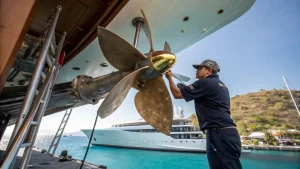
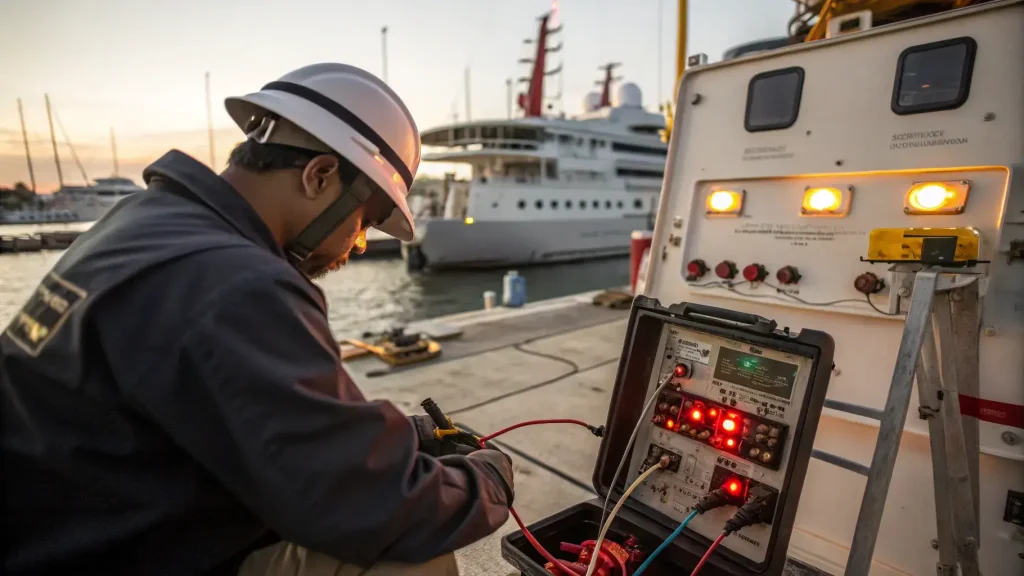
A repair that is not documented did not happen, as far as an insurer, a surveyor or a future buyer is concerned. The record needs four things: photographs at each stage, a variation log with written approvals, measured figures where the work produced numbers, and a clear separation between damage repair and improvement.
This matters more in Indonesia than in markets where invoices are detailed as a matter of course. Local invoicing can be brief, verbal agreement is common and comfortable, and the paperwork that a claims adjuster in another country expects simply does not appear unless somebody deliberately creates it.
The four pillars
1. Photographs at every stage
Not a handful at the end. A sequence:
- Before anything is disturbed. For damage, this is the most important set you will ever take, and it cannot be recreated.
- After stripping. The true extent, which is almost always greater than the visible damage.
- During repair, showing method: the laminate schedule, the weld preparation, the fastening pattern.
- Before it is covered. Once a repair is faired and painted it is invisible; the photograph is the only evidence of how it was built.
- Completed.
Include something for scale, and photograph wide as well as close — a detail shot with no context is hard to place a year later.
2. Variation log with written approvals
Every item not in the original scope, with: what was found, a photograph, why it needs doing, the price in USD, the date it was approved, and by whom. This log is what turns a final account from a negotiation into a reconciliation, and it is exactly what an insurer asks for when a claim exceeds the initial estimate.
Insurers pay to restore what was damaged, not to improve it. If a repair upgrades something — better materials, larger capacity, a newer component — that portion is usually the owner’s. Separating the two in the scope, before the work, avoids the whole claim being disputed because the invoice mixed them.
3. Measured figures
Wherever work produced a number, record it:
| Work | Record |
|---|---|
| Coating | System and product, batch numbers, number of coats, dry film thickness, application dates and conditions. |
| Laminating | Resin type, laminate schedule, cure conditions. |
| Welding | Procedure, consumables, any testing carried out. |
| Metal hull | Ultrasonic thickness readings as a grid, before and after. |
| GRP hull | Moisture readings against a control area, mapped and dated. |
| Alignment | Engine alignment figures, taken afloat. |
| Running gear | Bearing clearances, shaft runout, propeller specification. |
| Corrosion | Anode consumption percentage and elapsed time; bonding continuity readings. |
4. Invoices that describe the work
A single line reading “hull repair” is worth almost nothing at claim time. Ask for invoices that break work into the same items as the scope, so scope, log, photographs and invoice all reconcile. Where a yard will not itemise, the coordinating desk’s own scope and log carry the burden — which is one reason the record is kept independently of the yard.
Working with insurers in practice
- Notify early. Most policies require prompt notification, and a late notification is a reason to reduce or refuse a claim.
- Do not dispose of damaged parts until the insurer agrees. A removed component is evidence.
- Understand the exclusions before the work. Wear and tear, gradual deterioration and pre-existing condition are excluded on most policies, so scoping must distinguish those from event damage.
- Expect a surveyor on any significant claim, and make the record available rather than summarising it.
- Check cover ashore. Cover afloat frequently does not extend to a vessel stored ashore or under repair — a point that also applies to lay-up, as noted on Bali slipway and hardstand.
Why it matters at resale
A pre-purchase surveyor finds the repair whether or not you disclose it. The difference is what happens next. A documented repair with photographs, a laminate schedule and coating records reads as a well-managed vessel and the negotiation moves on. An undocumented repair reads as concealment, and the buyer prices in the worst case they can imagine.
The same logic applies to maintenance. A boat with a consistent log of measured figures over several years is demonstrably better cared for than one with a folder of receipts, and it prices accordingly.
A practical filing structure
- One folder per yard period, dated, containing scope, variation log, photographs by stage, measured figures, invoices and the closing item list.
- A running maintenance log separate from yard periods, recording routine interventions with dates, parts and readings.
- A survey folder holding every condition survey, in date order, so trends are visible.
- Digital and backed up, and not only on a device that lives on the boat.
- Handed over on sale. It is part of the vessel’s value.
Every job coordinated by this desk closes with that file — the process is described on how boat repair in Bali works and in the shipyard capability guide.
A minimum viable record, if you do nothing else
Not every owner will run a full document set. If you keep only five things, keep these:
- Before-disturbance photographs of any damage, with the date.
- The written scope as agreed, including exclusions and the discovery allowance.
- The variation log with approvals, even if it is a phone message thread that is exported and dated.
- Photographs immediately before anything was covered — faired, painted or closed behind joinery.
- The final invoice itemised against the scope, so the three documents reconcile.
Those five survive a claim, a survey and a sale. Everything else is refinement.
Common documentation failures
- Photographs with no scale or context, impossible to place a year later.
- Verbal approvals that both parties remember differently once the account arrives.
- Invoices reading “repairs as agreed”, which reconcile with nothing.
- Damage and improvement mixed in one line, which invites an insurer to dispute the whole item.
- Records held only on a device aboard, which is the device most likely to be lost in the incident you are documenting.